January 07, 2026
Income tax exemptions for employees of authorized persons limited, a 3-year transitional period for existing entities - Colombo Port City Economic Commission explains
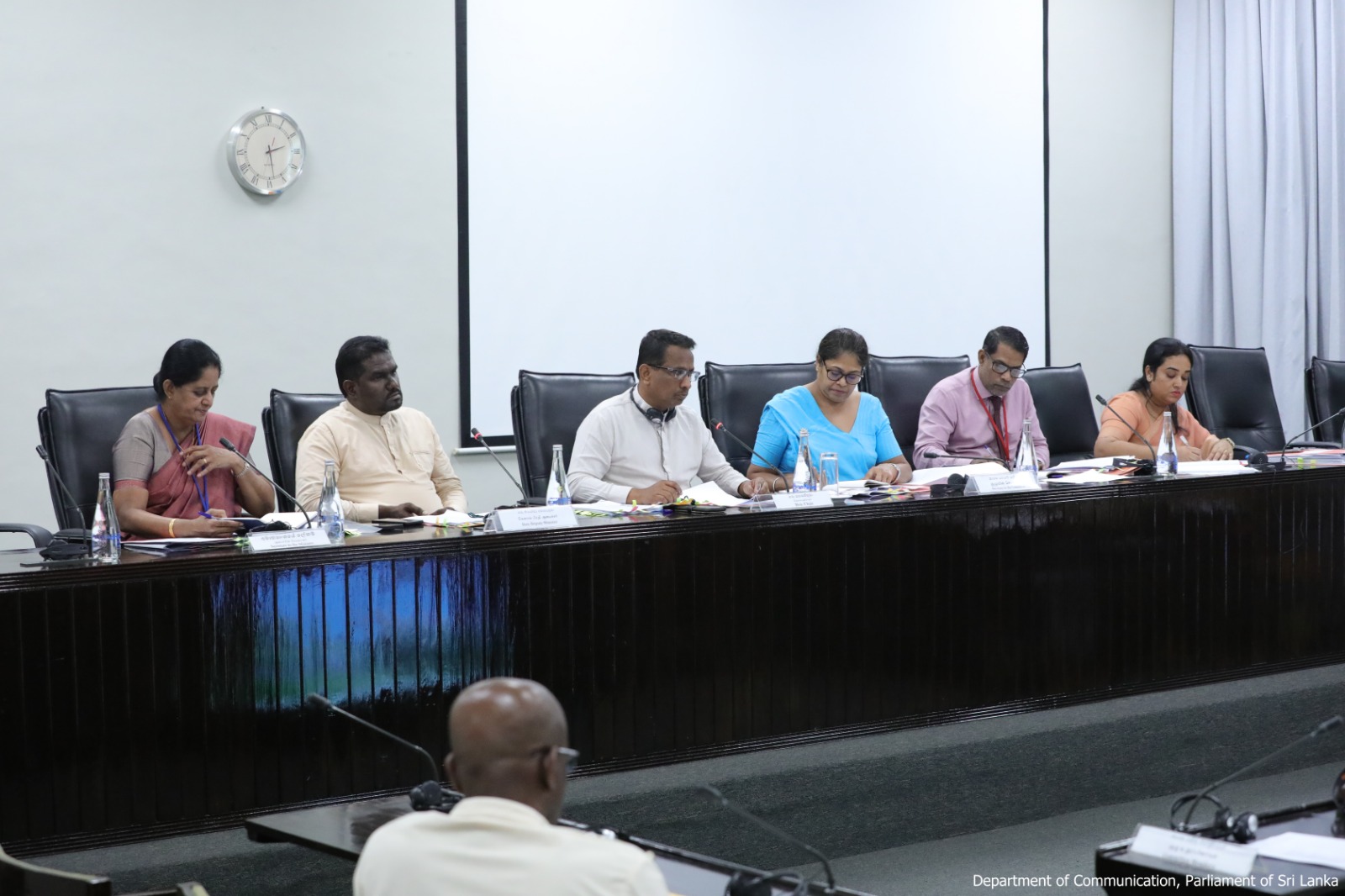
CoPF approves the Colombo Port City Economic Commission (Amendment) Bill and Regulations Issued under the Imports and Exports (Control) Act, No. 1 of 1969 post considerationIn consideration of the Colombo Port City Economic Commission (Amendment) Bill, it was stated that the amendment thus limits income tax exemptions for employees of new entrant authorized persons. However, officials present stated that a 3-year transitional period for existing entities has been given.This was discussed at length at the Committee on Public Finance, chaired by Hon. Dr. Harsha de Silva, held in Parliament on 06.01.2026, when Members of the Committee sought clarity on the rationale for amending tax incentives, particularly the decision to limit income tax exemptions for employees of authorized persons to a transitional period for existing entities, while discontinuing such exemptions for new entrants.The Committee also examined proposed changes to application fees and charges, to reduce upfront costs on the part of investors by deferring certain payments until licensing, while seeking assurance that the revised structure would remain competitive and transparent.The Committee also queried the alignment of foreign exchange provisions with the Foreign Exchange Act No. 12 of 2017, seeking clarification on the treatment of rupee earnings, currency conversion, and safeguards to ensure consistency with national monetary and financial regulations.The offshore banking framework attracted significant attention, with the Committee Members requesting updates on the status of banking licence applications, differences between Port City offshore banking operations and domestic banking activities, and the adequacy of regulatory oversight. The Central Bank’s enhanced supervisory role, including capital, liquidity, governance, and compliance requirements, was discussed in the context of international best practices.Concerns were also raised regarding enforcement and penalties for non-compliance, with Members of Parliament emphasizing the need for deterrent-level sanctions, effective monitoring, and strong reputational safeguards to maintain the integrity of the Port City.Officials noted that the amendments are intended to operationalize the Port City framework, enable approvals of new business activities, and balance investor attractiveness with fiscal discipline, transparency, and international commitments.The Committee also took into consideration the Regulations issued under the Imports and Exports (Control) Act, No. 1 of 1969 (as amended). Accordingly, Regulations issued under the Imports and Exports (Control) Act, No. 1 of 1969(as amended), were presented to the Committee seeking approval to enable tax exemptions, streamlined procedures, and the swift clearance and distribution of relief goods donated by foreign donors to those affected by Cyclone Ditwah, received in the name of the Disaster Management Center or any government institution.The Committee questioned the Ministry of Finance on the non-establishment of the Disaster Management Fund, despite the existence of the necessary legal provisions and approvals. The Committee also raised concerns regarding the delay in establishing the “Rebuilding Sri Lanka Fund” as statutory fund, noting the potential issues that could arise if further delays persist. Accordingly, the Committee urged officials of the Ministry of Finance to take proactive measures in this regard.Following in-depth deliberations, the Committee approved the Colombo Port City Economic Commission (Amendment) Bill and the Regulations issued under the Imports and Exports (Control) Act, No. 1 of 1969. (as amended)The meeting was attended by Hon. Deputy Ministers Chathuranga Abeysinghe, Dr. Kaushalya Ariyaratne, Nishantha Jayaweera, Hon. Members of Parliament Ravi Karunanayake, Rauff Hakeem, Attorney-at-Law, Nimal Palihena, Wijesiri Basnayake, Thilina Samarakoon, Champika Hettiarachchi, Sunil Rajapaksha, Ajith Agalakada, and Lakmali Hemachandra, Attorney-at-Law.